

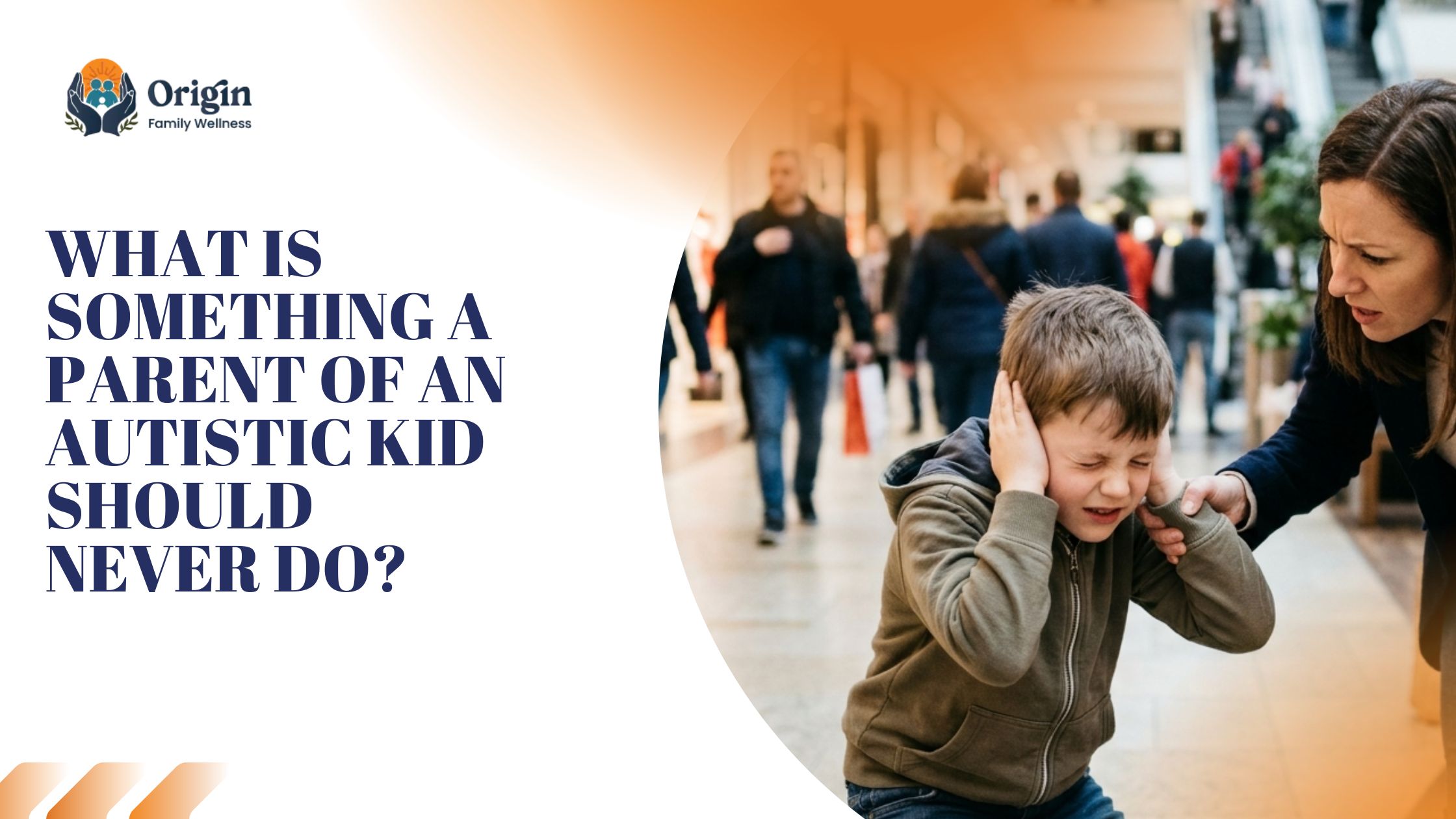
What Is Something a Parent of an Autistic Kid Should Never Do?
Well-meaning advice often pushes parents to correct behaviors that are harmless. The result is a child working to appear less autistic rather than getting the support they need. If one rule matters above the rest, it's this: never pressure your child to suppress who they are.
That includes forcing eye contact or physical affection, punishing meltdowns, stopping harmless stimming, dismissing non-speaking communication, and encouraging masking. Separating traits that need support from traits that need acceptance is most of what a parent of an autistic kid should never do.
Key Takeaways
Don't force eye contact or physical affection. Both can cause genuine distress and teach children their boundaries don't count.
Don't punish meltdowns. They're involuntary responses to overwhelm, not chosen misbehavior.
Don't suppress harmless stimming, which often helps your child regulate.
Don't spring changes without warning, and don't compare your child's progress to other children's.
Don't dismiss communication attempts just because they aren't spoken words.
Do respect sensory needs, keep routines predictable, and listen to autistic adults about autistic experience.
Why Does Parenting an Autistic Child Require a Different Approach?
Autistic children process the world differently, and that's the whole reason conventional parenting advice sometimes misses.
Sensory processing varies enormously. A fluorescent light that you barely notice may be genuinely painful. Communication may happen through gesture, script, device, or silence rather than conversation. Emotional regulation often takes longer and requires more support. Routines provide safety in ways that can look rigid from outside but serve a real purpose.
Here's the distinction that matters most. Some autistic traits need support, like difficulty with transitions or sensory overwhelm. Others need nothing at all beyond acceptance, like stimming or intense interests. Trying to eliminate the harmless ones costs your child energy and gains them nothing.
Effective parenting here means learning which is which for your child specifically, since no two autistic children need the same things.
What Should a Parent of an Autistic Child Never Do?
Eight things to avoid, with a better alternative.
Never Ignore Your Child's Sensory Sensitivities
When your child says the shirt hurts, the shirt hurts. Sensory sensitivities aren't preferences or dramatics, they're differences in how the nervous system registers input.
Loud noises, fluorescent lighting, certain fabrics, crowded spaces, strong smells. Any of these can cause actual discomfort or push a child toward sensory overload, which is exhausting and often ends in a meltdown.
Adjusting is usually easier than you'd think. Cut the tags out, find the softer fabric, bring ear defenders, shop at quieter times. These aren't indulgences; they're accommodations that let your child function.
Never Force Eye Contact or Physical Affection
For many autistic people, eye contact is uncomfortable and actively interferes with listening. Demanding it means your child is concentrating on holding your gaze rather than processing what you're saying.
Physical affection works similarly. Some autistic children love hugs, others find unexpected touch distressing, and plenty depend on the day. Forcing a hug for a relative's benefit teaches something you don't want taught, which is that their comfort matters less than someone else's feelings.
Let your child listen however works for them. Ask before touching, and accept no as an answer.
Never Punish Your Child for Having a Meltdown
Meltdowns aren't tantrums, and the difference is important. A tantrum is goal-directed and stops when the goal is met or clearly won't be. A meltdown is an involuntary response to overwhelm, and the child has no more control over it than you have over a sneeze.
Punishing one adds distress to a nervous system already past capacity. It also teaches your child that overwhelm brings consequences, which increases anxiety and makes the next one more likely.
What helps is reducing input, keeping everyone safe, staying calm, and waiting. Conversations about what happened come later, once your child has recovered.
Never Stop Harmless Stimming Behaviors
Rocking, hand-flapping, spinning, repeating phrases. These behaviors usually help regulate emotions and sensory input, so stopping them removes a coping tool without replacing it.
Children told to have "quiet hands" often don't stop needing to stim. They just learn to suppress it in front of people, which costs energy and teaches them that natural behavior is shameful.
The exception is stimming that causes injury, like head-banging or skin-picking that breaks the surface. That needs attention, though the goal is a safer alternative rather than simple suppression, and an occupational therapist can help you find one.
Never Make Sudden Changes Without Preparation
Unexpected change is genuinely hard when predictability keeps you regulated. A canceled plan or a different route home can feel disproportionate from outside and entirely proportionate from inside.
Prepare where you can. Use visual schedules, countdown warnings before transitions, and a heads-up about what's happening tomorrow. When change arrives unannounced, as it sometimes does, explain it clearly and give your child time to adjust rather than expecting immediate flexibility.
Never Compare Your Child to Other Children
Autistic development is uneven. A child might read early and struggle with buttons, or have an enormous vocabulary and struggle to hold a conversation.
Comparing your child to siblings, classmates, or milestone charts creates pressure that helps nobody, and children absorb far more than parents realize, including sighs and worried glances.
Measure against your own child six months ago. That comparison tells you something useful.
Never Dismiss Your Child's Communication Attempts
Speech is one way to communicate, not the only valid one. Gestures, pointing, leading you by the hand, facial expressions, AAC devices, typing, echolalia used meaningfully. All of it is communication.
Responding only to spoken words teaches children their other attempts don't register, and some stop trying. Treat every attempt as communication worth answering, and avoid demanding words from a child who's already made their meaning clear another way.
Never Force Your Child to Hide Their Autistic Traits
Masking means suppressing natural behavior to appear more neurotypical. Holding eye contact that hurts, hiding stims, performing social scripts that don't come naturally.
It's exhausting, and research consistently links sustained masking with anxiety, depression, burnout, and a weakened sense of self. Children who mask all day frequently fall apart at home, because home is the only place it's safe to stop.
Teaching social skills is reasonable. Teaching a child that who they are is unacceptable is different, and the line between them is worth watching carefully.
What Should Parents Do Instead to Support Their Autistic Child?
Knowing what to avoid only gets you halfway. These are the approaches that tend to work:
Respect sensory needs. Adjust lighting, noise, clothing, and surroundings to suit your child rather than expecting them to tolerate what everyone else does. Noticing which inputs cause trouble is half the work.
Use clear communication. Keep instructions simple and concrete, give processing time after speaking, and support whatever communication methods your child uses, including devices and gestures.
Maintain predictable routines. Visual schedules help enormously. Flag upcoming changes in advance rather than announcing them as they happen.
Respond calmly to distress. During a meltdown, prioritize safety, reduce sensory input, and stay nearby without demanding anything. Talking comes afterward.
Encourage independence. Offer age-appropriate choices and let your child develop everyday skills at their own pace, even when doing it yourself would be faster.
Celebrate individual progress. Notice what your child has achieved relative to where they were, not relative to anyone else.
Listen to autistic perspectives. Autistic adults write and speak about this extensively, and their insight into autistic experience is something no parenting book replicates. Include your child's preferences in decisions about them, too.
How Can Parents Build Trust and Emotional Safety With an Autistic Child?
Trust builds through consistency rather than any single conversation. Children learn whether you're safe by watching how you respond repeatedly, particularly when things are difficult.
Recognize and Validate Your Child's Feelings
When your child is distressed about something that seems minor to you, the distress is still real. Dismissing it, even gently, teaches them their internal experience isn't trustworthy.
Try acknowledging first. "That noise is really bothering you" lands better than "it's not that loud." You're not agreeing that the noise is objectively unbearable; you're confirming that their experience matters. Children who feel understood come to you sooner next time.
Create a Safe Space for Communication and Self-Expression
Home should be where masking stops. That means stimming is fine, communication can happen however it happens, and intense interests get genuine interest from you rather than tolerance.
Those interests are worth leaning into. They're often where your child feels most confident, and sharing one with you builds connection faster than most structured activities will.
When Should Parents Seek Professional Support?
Some situations need more help than parenting adjustments can provide. Consider reaching out if your child experiences frequent distress without clear triggers, if there's self-injurious behavior, if communication difficulties cause significant frustration, or if daily life has become hard for your child or your family.
Start with your pediatrician, who can check for medical causes and refer onward. Occupational therapists help with sensory processing and daily living skills. Speech-language therapists support communication across all its forms, including AAC. Look for professionals who are autism-informed and work from an acceptance perspective rather than one focused on making your child appear less autistic.
Conclusion
The single thing never to do is ask your child to appear less autistic. Forced eye contact, punished meltdowns, suppressed stimming, dismissed non-speaking communication, and sustained masking all deliver that message regardless of intent. Support the traits that require support. Accept the traits that affect nobody.
Measure progress against your own child's earlier development rather than against peers or milestone charts. When daily life becomes difficult, seek autism-informed professionals who work from an acceptance framework rather than a correction model. If nutrition, sleep, or digestive issues are contributing at home, Origin Family Wellness can help you identify where to begin.